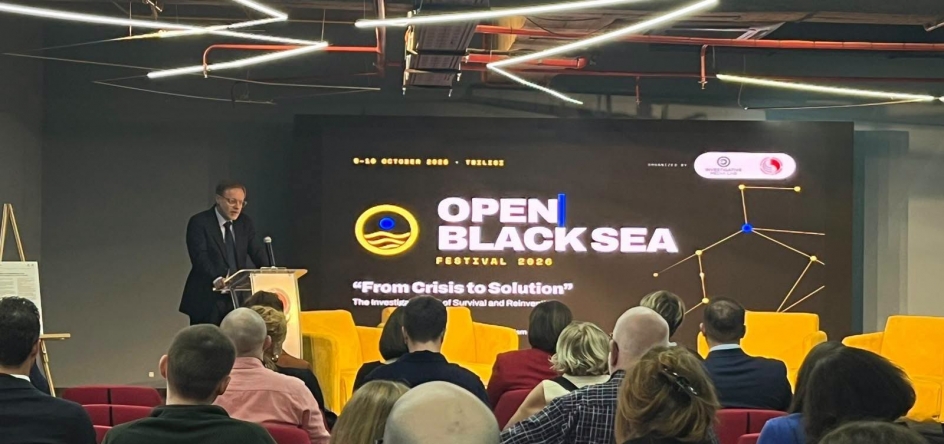
On October 9–10, the University of Georgia hosted Open Black Sea 2026, an investigative journalism festival dedicated to the Black Sea region. Organized by the University of Georgia’s Investigative Media Lab (IML), the festival brought together journalists, editors, and students from six countries: Georgia, Ukraine, Moldova, Romania, Bulgaria, and Turkey.
The aim of Open Black Sea 2026 was to strengthen investigative journalism across the region, foster professional collaboration, and support fact-based journalistic investigations into issues of importance to the Black Sea region.
The main theme of the festival was the role of investigative journalism in examining environmental and regional challenges. The two-day program included practical workshops, discussions, and hands-on work with real-world cases, covering the use of modern investigative tools and the societal impact of journalistic reporting.
As part of the festival, Emerging Voices – an investigative journalism hackathon focused on Black Sea issues was held. Students and practicing journalists, including freelancers, submitted written investigative pitches. An international jury comprising Henrik Grunnet, Ides Debruyne, Mark Lee Hunter, and William Dunbar evaluated the submitted ideas in writing.
The four hackathon winners were Tamta Chkhaidze, Anano Omadze, Tamar Buturishvili, and Tamar Sikharulidze — students and freelance journalists. In addition to receiving various prizes, the winners were awarded three months of editorial support from the University of Georgia’s Investigative Media Lab (IML) and the "Batumelebi" team, helping them develop their ideas into full-fledged investigative stories.
The University of Georgia continues to actively support events of this kind, strengthening professional connections within the field while providing students with opportunities to gain valuable hands-on experience as part of their studies.